"Man Falls Asleep and Dreams He Fell Asleep" (Miskatonic Press, Vol. 3)
- hannah.m.kubiak
- May 15, 2024
- 3 min read
Updated: Nov 7, 2024

Miskatonic Press started because I couldn't remember which stories I'd already read in my H.P. Lovecraft anthology. When I finished a story, I would go to the table of contents and write a one-sentence summary of what happened (usually in a humorous way). I would typically phrase them like a newspaper headline or the tag line for a movie.
This time I read a story called, "Polaris." Here are the headlines:
Man falls asleep and dreams he fell asleep.
10% Inception, 85% astronomy, 5% standing around trying to stay awake.
Man given to "strange faintings when subjected to stress or hardship," experiences strange fainting when subjected to stress and hardship.
"Polaris" was one of Lovecraft's earlier stories, published in December of 1920. It is said to be highly autobiographical in nature, and in it Lovecraft grapples with his experiences during the first World War.
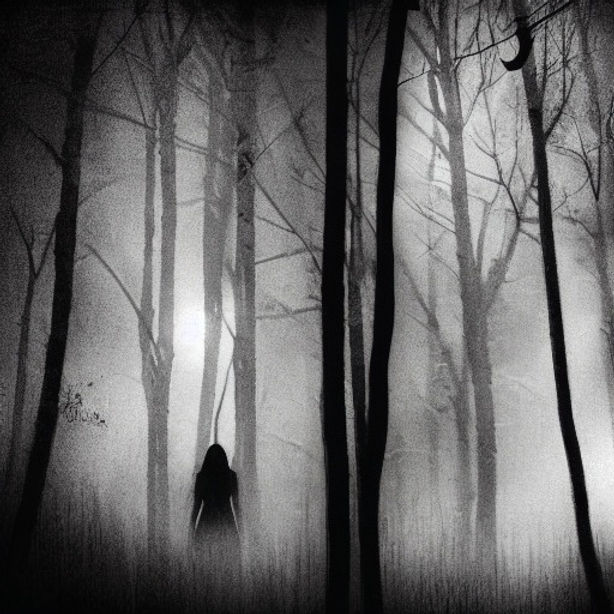
Over many sleepless nights in his house in the swamp, our narrator takes up stargazing and becomes obsessed with a certain star: the Pole Star, called Polaris. At some point the guy falls asleep and dreams of a marble city, over which the Pole Star also shines in the sky. This star is the one constant in the real world and the world of the narrator's dream. But which is which?
One night he falls asleep (or wakes up) and finds himself in the marble city. He learns that the city is under siege by a people known as the Inutos. This is a not-so-subtle reference to the Inuit, the indigenous people of the Arctic and subarctic. True to form, Lovecraft's description of them is overtly racist.
As the story progresses, the narrator becomes confused about which world is real and which is a dream. The world of the marble city is definitely more interesting. For one thing, there are other people there, as opposed to the world where he lives in a swamp and presumably has only the crawdads for company.
During the siege of the city, the narrator is deemed too delicate for combat, "given to strange faintings when subjected to stress or hardship." Anyway, the people put him on watchtower duty, a bad idea for someone who habitually passes out in demanding situations. As he watches, he feels the intense gaze of the Pole Star, and hears the following words:
"Slumber, watcher, till the spheres,
Six and twenty thousand years
Have revolv'd, and I return
To the spot where now I burn.
Other stars anon shall rise
To the axis of the skies;
Stars that soothe and stars that bless
With a sweet forgetfulness:
Only when my round is o'er
Shall the past disturb thy door."
I'm definitely putting that one in my back pocket for when I have kids. It'll put them right to sleep, or keep them awake contemplating the sublime vastness of time and space and their utter insignificance in the universe.
In the end, the narrator falls asleep (or wakes up) on guard duty in the marble city. The result is either the death of millions, or a dude snoozing in a swamp had a bad dream.
Come down the rabbit hole:
Want to read the story? Here it is on hplovecraft.com: "Polaris"
"Polaris" includes a reference to something called the Pnakotik Manuscripts, the first of his fictional arcane manuscripts. Here's some info about all the manuscripts referenced in the Cthulhu Mythos, the most famous one being the Necronomicon, which has actually shown up in works by other authors as an homage to Lovecraft. Here's a link to some info about that: List of Cthulhu Mythos Books.


Comments