Death Omens: From the Banshee to the Mothman

Through the years and across cultures, people speculate about the afterlife, struggle to make sense of death, and develop bizarre traditions meant to reassure us that ultimately become a little creepy.
What is a Banshee?
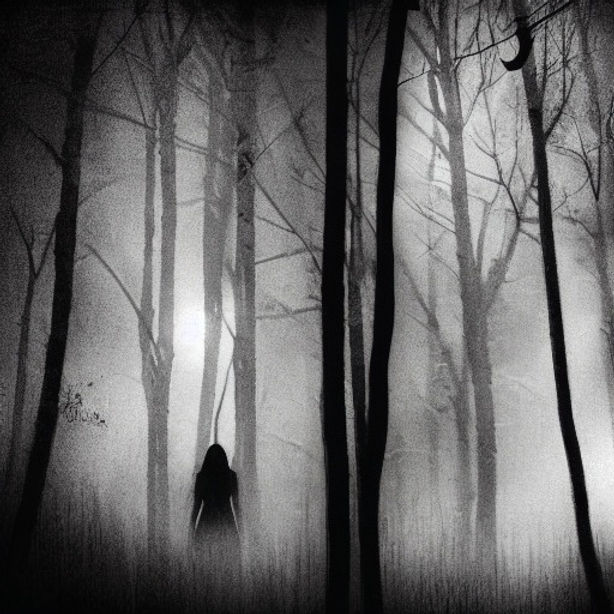
A banshee is a supernatural being in Celtic folklore, typically a woman dressed in gray or white. The word banshee comes from the Irish “bean-sí,” which means “woman of the fairy mounds.” The banshee can be heard keening or wailing at night, and it’s said that the sound means death to those who hear it or death to someone close to the hearer.
Descriptions of the banshee vary from a withered, ugly crone to a beautiful and melancholy maiden. Regardless of her age, the banshee was often depicted with long silver hair, which she was perpetually combing. Even harbingers of death have to put some time aside for self-care.
Origin of the Banshee
Professional mourners (or moirologists) go as far back as Ancient Egypt and China. In Egypt, moirologists went so far as to tear their hair out, smear themselves with dirt, and beat upon their bare breasts. More highly regarded mourners were given the roles of Isis and Nephthys, the two goddesses believed to play a special role in death. A mourner who played Isis or Nephthys was required to shave their entire body, not have children, and have the name of the goddess tattooed on their shoulder.
In medieval times, some women worked as professional mourners, or “keeners.” You could tell a good funeral by the excess of lamentation and wailing, and the survivors wanted their relative to have an impressive sendoff. Keeners were commonly paid in alcohol, so a stereotype quickly developed of professional mourners becoming drunken crones. They were shunned from society because of this. Weeping and wailing was all right, but being an alcoholic was not a spectacle to be tolerated.

In 16th century Ireland, great families kept a keener as part of the household. The greatest families were said to have fairy keeners who knew when someone in the house was about to die and responded accordingly, possibly by roaming the grounds and wailing into the night. Although her cry is feared, the banshee herself doesn’t bring death, but serves as an omen of its coming.
The Woman In White and La Llorona
The Woman in White is a common figure in legends around the world. She is the ghost of a woman who died a violent death, usually connected to unrequited love or an unfaithful lover. She lurks in remote locations like cemeteries, lakes, stretches of highway, and your local Blockbuster. In America, the road trip capital of the world, The Woman in White is a champion hitchhiker. The White Lady of Whopsy in Altoona, Pennsylvania gets into passing cars, but disappears from the car at a bend called Devil’s Elbow.

La Llorona is another weeping, ghostly woman popular in Mexico and South America. She wanders near bodies of water and wears “the white of grief,” mourning her drowned children. The legend of La Llorona was typically used to frighten children, and particularly to discourage them from playing near dangerous bodies of water. According to the legend, La Llorona was married to a wealthy ranchero who was unfaithful to her. When she found out, La Llorona drowned her two children. We can see parallels between La Llorona and Medea from Greek mythology, who also killed her two children when her husband left her for another woman.
Examples of female child-killers in mythology: Lilith, from Hebrew folklore, is said to be Adam’s first wife, a sexually wanton demon made out of the same clay as him. Her name translates to “night hag” or “screech owl,” and she roams the earth stealing babies. Lamia from Greek mythology became a child-eating monster after her children were destroyed by Hera, who was jealous of Lamia and Zeus. Hera cursed Lamia and made her into a half-snake creature.

Mothman as a Modern-Day Death Omen
Mothman is a creature reportedly seen in Point Pleasant, West Virginia, described as a giant moth with red eyes, taller than a grown man. The first sighting was in 1966, and was reported in the Point Pleasant Register: “Couples See Man-Sized Bird… Creature… Something.” There are a lot of theories about what the creature might actually have been, including a large heron called a “shitepoke”, or an unusually big owl.
In 1975, John Keel wrote, “The Mothman Prophecies,” linking supernatural events and disasters to the sightings. He alleges that Mothman is connected to the 1967 collapse of the Silver Bridge that connects Point Pleasant to Gallipolis, OH. Point Pleasant is where Mothman makes his home, but he has been seen in other places. Mothman sightings in Moscow allegedly foreshadowed the 1999 Russian Apartment Bombings.

There is a 12-foot statue of Mothman in Point Pleasant, and since 2002, every September the town celebrates, “The Annual Mothman Festival.” So enthusiastic are Americans about the Mothman, that in June of 2020, a petition was started to replace all Confederate statues in the United States with statues of Mothman.
Originally people thought that Mothman was causing these terrible catastrophes, but a new theory developed that Mothman was actually an omen of impending disaster. He was sighted before Chernobyl and in the vicinity of the World Trade Center before 9/11.
Humankind across the world has been trying to explain tragedy and death for thousands of years. In the back of our mind, perhaps we pray that we can somehow foresee and prevent tragedy before it happens. Do these stories we tell ourselves reassure us, or merely deepen the sense that death is something we will never fully accept or understand?
Follow me down the rabbit hole. Contains affiliate links, and Writing Hermit may receive a small commission, at no cost to you.
Convincing Stories of People Who Saw the Mothman in Real Life (ranker.com)
Freelance illustrator James Bousema, in addition to his illustration of Mothman, has a whole portfolio of artwork on artstation.com. If you like film, comics, and a bit of gore, take a look at his portfolio.
"The Mothman Prophecies," by John A. Keel
There's also a Mothman group on DeviantArt with artwork by various Deviants: Official Mothman Group. What can I say? People love cryptids.
We have an episode about The Mothman in “The Witching Hour Broadcast,” a comedy radio show about a swamp town and its unusual residents. The episode is called, “Stop Sexualizing the Mothman.”


Comments